

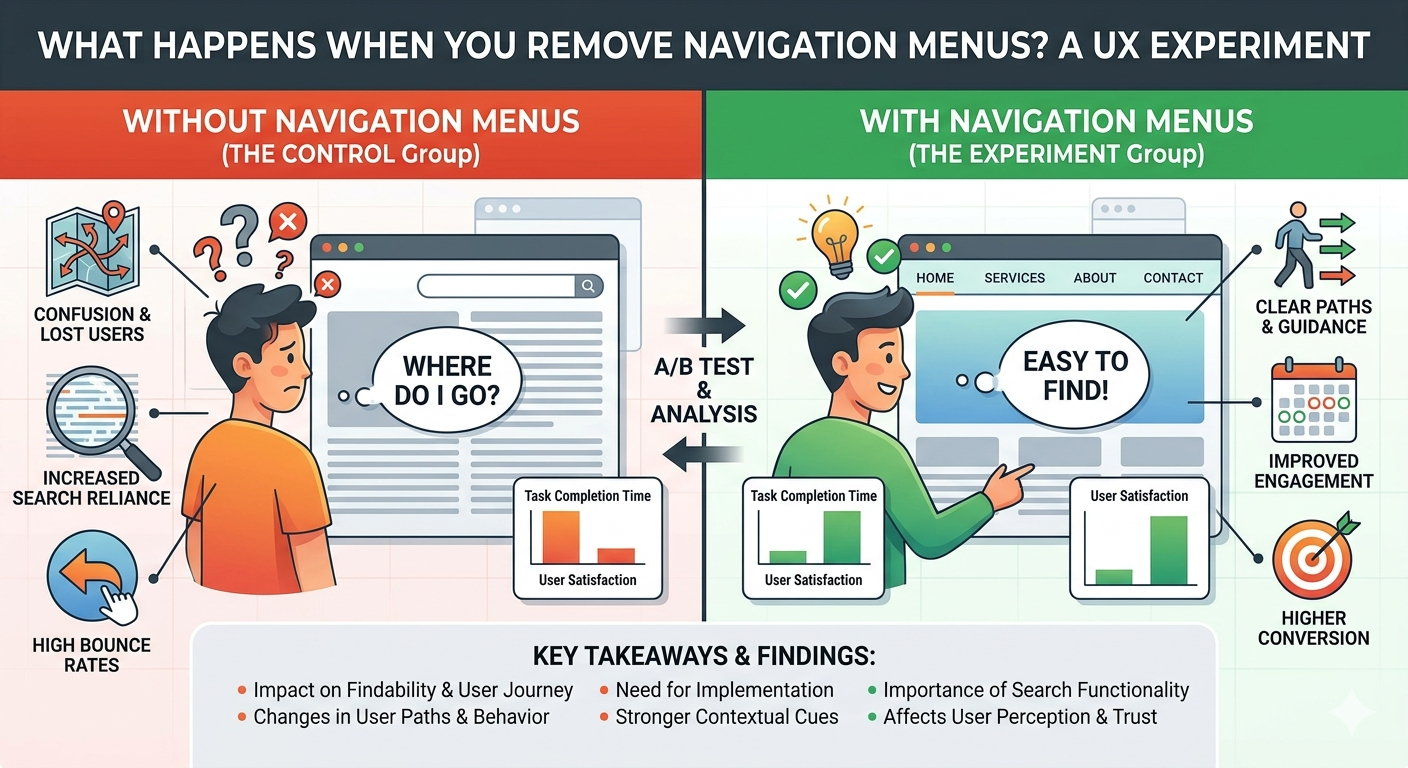
Let’s imagine something a little bold for a moment. You open a website and the navigation menu is gone. No top bar. No dropdown links. No clear path telling you where to go next. Sounds strange, right? It almost feels uncomfortable just thinking about it.
Navigation menus have been a core part of web design. They guide users and help them explore content easily. That is why removing them sounds risky at first. However, some designers have started experimenting with this idea.
Interestingly, web designers in Melbourne, Australia, have also explored this concept in creative projects. They do not always remove navigation completely. However, they rethink how users move through a website. This opens up new possibilities for design.
Why Even Try Removing Navigation?
You might wonder why anyone would remove something so important. The answer is simple. Designers want to simplify the experience. Too many options can overwhelm users. This is known as choice overload.
When users see too many links, they may feel confused. They might not know where to click first. So removing navigation can reduce that pressure. It creates a more focused experience.
Moreover, it encourages users to follow a guided journey. Instead of jumping around randomly, they move step by step. This can improve engagement in certain cases.
Web designers melbourne australia often test these ideas with landing pages. They focus on one clear goal. This could be signing up or making a purchase. So removing navigation helps keep users on track.
What Changes in User Behavior?
When navigation disappears, user behavior changes quickly. People rely more on visual cues and content flow. They start paying closer attention to what is in front of them.
For example, buttons and calls-to-action become more important. These elements guide users through the experience. They act as signposts instead of menus.
Moreover, scrolling becomes the main way to explore. Users move down the page to discover more content. This creates a story-like experience.
Web designers in Melbourne australia often design pages that feel like a journey. Each section leads naturally to the next. This keeps users engaged without needing a menu.
The Good Side of Removing Navigation
There are some clear benefits to this approach. First, it creates a clean and distraction-free layout. Users focus on the main message without getting sidetracked.
Second, it improves conversion rates in some cases. When users have fewer choices, they are more likely to take action. This works well for campaigns and product launches.
Moreover, it can make the design feel modern and bold. It breaks away from traditional layouts. This helps brands stand out.
Web designers in Melbourne australia sometimes use this technique for creative portfolios. It allows them to showcase work in a unique way. The experience feels immersive and memorable.
The Challenges You Cannot Ignore
Now let’s be honest. Removing navigation is not always a good idea. It can create confusion if not done carefully.
Users expect some level of control. They want to explore at their own pace. Without navigation, they may feel stuck or lost.
Moreover, it can make large websites difficult to use. If there is a lot of content, users need a way to find specific information. A menu helps with that.
Web designers in Melbourne australia understand these risks well. They do not remove navigation blindly. They consider the purpose of the website first.
When This Approach Works Best
This experiment works best in specific situations. It is not meant for every type of website.
For example, landing pages benefit from this approach. They focus on one goal. Removing navigation keeps users focused on that goal.
Storytelling websites also work well without menus. They guide users through a narrative. Each section builds on the previous one.
Moreover, creative portfolios can use this style effectively. It allows designers to control how their work is presented.
Web designers in Melbourne australia often choose this approach for short and focused experiences. They match the design to the purpose of the project.
When You Should Avoid It?
There are situations where removing navigation can cause problems. Large websites with many pages need clear structure.
For example, e-commerce platforms require easy navigation. Users need to browse categories and compare products. Without menus, this becomes difficult.
Moreover, informational websites rely on accessibility. Users should find what they need quickly. Navigation helps achieve that.
Web designers in Melbourne australia usually keep navigation for complex websites. They focus on improving it instead of removing it.
Alternative Approaches to Navigation
Removing navigation does not have to be all or nothing. Designers can explore creative alternatives.
For example:
- Hidden menus can keep the interface clean. A simple icon can reveal options when needed. This reduces clutter while maintaining functionality.
- Another approach involves sticky navigation. It stays visible as users scroll. This makes navigation easy without interrupting the experience.
- Contextual navigation can guide users based on their actions. It shows relevant options at the right time.
What This Means for the Future?
This experiment shows something important. Design is not fixed. It evolves based on user behavior and technology.
Removing navigation challenges traditional thinking. It encourages designers to explore new ideas. This leads to innovation.
Moreover, it reminds us to focus on user experience. Every design choice should serve a purpose. There is no need to follow rules blindly.
Final Words:
So what happens when you remove navigation menus? The answer depends on how you do it. The key is understanding your goals and audience. Design should always support user needs. Sometimes that means simplifying things. Other times it means providing clear guidance.
Web designers in Melbourne, Australia, approach this idea with care. They test, adapt, and refine their designs. This ensures the best possible outcome.
In the end, there is no single right answer. Design is about making thoughtful choices. And sometimes, breaking the rules can lead to something truly interesting.
For further help, contacting Make My Website can be a great idea.