

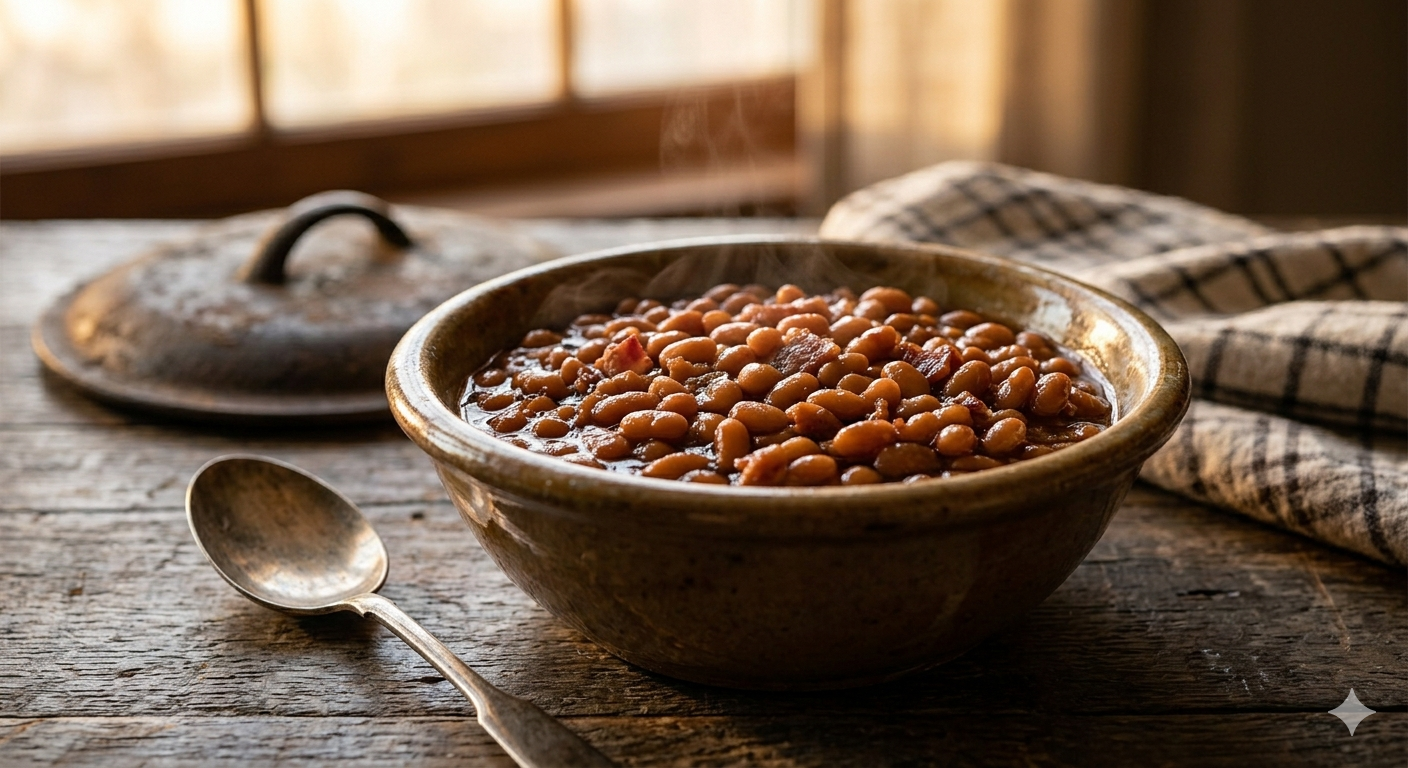
Nothing says comfort food quite like a smoky, sweet, and savory batch of Grandma’s old fashioned baked beans. This isn’t your average quick-fix side dish from a supermarket can. True old-fashioned baked beans are a labor of love—slow-cooked to perfection until the beans are tender, the rich molasses sauce is thick and caramelized, and the smoky bacon flavor infuses every single bite.
Whether you are hosting a summer backyard barbecue, preparing a cozy family Sunday dinner, or looking for the ultimate potluck side dish, this classic recipe will steal the show.
The Secret to Authentic Old Fashioned Baked Beans
The secret to matching Grandma’s legendary flavor profile comes down to two major elements: patience and layers of flavor.
- The Bean Choice: Traditional recipes almost exclusively use dried Navy beans (also known as pea beans) or Great Northern beans. They hold their shape perfectly during hours of slow cooking without turning into mush.
- The Sweetener: Instead of just dumping regular white sugar, old-school recipes rely on a combination of dark molasses and brown sugar. Molasses gives the dish its signature deep, dark color and a complex, slightly bitter mineral sweetness.
- The Fat and Smoke: Thick-cut salt pork or smoky bacon is essential. As the fat renders out during the baking process, it creates a silky, luxurious mouthfeel and coats the beans beautifully.
Ingredients You’ll Need
- 1 pound (16 oz) dried Navy beans or Great Northern beans
- 1/2 pound thick-cut bacon or salt pork, chopped into 1-inch pieces
- 1 medium yellow onion, finely diced
- 1/3 cup dark molasses
- 1/2 cup packed dark brown sugar
- 1/4 cup ketchup (or tomato paste for a richer base)
- 2 tablespoons apple cider vinegar (for a touch of tang)
- 1 tablespoon Dijon mustard or dry mustard powder
- 1 teaspoon smoked paprika
- Salt and freshly cracked black pepper to taste
Step-by-Step Instructions
Step 1: The Overnight Soak
Wash and sort through your dried beans, removing any small stones or debris. Place the beans in a large bowl or pot and cover them with at least 3 inches of cold water. Let them soak overnight (at least 8 to 12 hours).
Quick Soak Method: If you are short on time, bring the beans and water to a rolling boil for 2 minutes. Remove from heat, cover with a lid, and let them sit for 1 hour before draining.
Step 2: Parboil the Beans
Drain the soaked beans and rinse them thoroughly. Place them into a large pot, cover with fresh water, and bring to a gentle boil. Reduce heat to low and simmer for about 30 to 45 seconds, or until the bean skins start to crack slightly when you blow on them. Drain the beans, but reserve the cooking liquid! You will need this liquid later to keep the beans moist while baking.
Step 3: Mix the Sauce
In a medium bowl, whisk together the molasses, dark brown sugar, ketchup, apple cider vinegar, mustard powder, smoked paprika, salt, and pepper along with 2 cups of the reserved bean cooking water.
Step 4: Layer and Assemble
Preheat your oven to $325^\circ\text{F}$ ($163^\circ\text{C}$). In a heavy Dutch oven or a traditional bean pot, layer half of your chopped bacon and diced onions at the bottom. Pour the parboiled beans on top, then layer the remaining bacon and onions right on top of the beans. Pour your prepared molasses sauce evenly over everything. The liquid should just barely submerge the beans. If it doesn’t, add a bit more of your reserved bean water.
Step 5: The Slow Bake
Cover the pot tightly with its lid (or aluminum foil) and place it in the oven. Bake for 3 to 4 hours. Check the beans every hour; if they look like they are drying out, add a splash of the reserved bean water.
During the last 30 minutes of baking, remove the lid entirely. This allows the top layer of bacon to crisp up beautifully and lets the sauce reduce into a thick, glossy glaze.
Frequently Asked Questions (FAQs)
Can I use canned beans instead of dried beans?
Yes, you can! If you are in a rush, substitute the dried beans with three 15-ounce cans of Navy beans or Great Northern beans (drained and rinsed). Because canned beans are already cooked, reduce your total oven baking time to about 45 minutes to 1 hour at $350^\circ\text{F}$ ($177^\circ\text{C}$) just until the sauce thickens. However, note that the texture won’t be quite as rich as using dried beans.
Why are my baked beans still hard after hours of cooking?
Hard beans are usually caused by two common mistakes: using old dried beans (which lose their ability to absorb moisture over time) or adding acidic ingredients too early. Acid (like vinegar, ketchup, or molasses) binds to the bean skins and prevents them from softening. Always ensure your beans are parboiled until slightly tender before mixing them with your acidic sauce components.
How do I store and reheat leftovers?
Leftover baked beans taste even better the next day as the flavors continue to marry! Store them in an airtight container in the refrigerator for up to 4 to 5 days. Reheat them gently on the stovetop over low heat or in the microwave, adding a tiny splash of water or broth if the sauce has thickened up too much.
Can I make Grandma’s baked beans in a Slow Cooker?
Absolutely. After parboiling the beans, layer all your ingredients into your slow cooker/Crockpot instead of a Dutch oven. Cover and cook on Low for 7 to 8 hours or on High for 4 to 5 hours until the beans reach your desired level of tenderness.
Tips for Making Grandma’s Old Fashioned Baked Beans
To capture the authentic, rich flavor of a traditional recipe, keep these essential kitchen tips in mind:
- Don’t Rush the Soak: Always soak your dried beans overnight for 8 to 12 hours. This ensures even cooking and prevents the skins from bursting prematurely.
- Avoid Hard Beans (Watch the Acid): Acidic ingredients like vinegar, molasses, and ketchup bind to bean skins and prevent them from softening. Always make sure your dried beans are parboiled until slightly tender before adding the sauce.
- Save the Cooking Water: When you parboil your beans, do not throw away all the water. Save a few cups of this starchy liquid. It is the perfect flavor-packed base to add to your baking pot if the beans start looking dry in the oven.
- Bake Uncovered at the End: Bake your beans covered for the first few hours to keep them moist, but remove the lid during the last 30 minutes. This allows the top layer of bacon to crisp up and the sauce to reduce into a rich, glossy glaze.
How to Make Classic Baked Beans
The traditional method relies on slow-baking to transform simple ingredients into a deeply caramelized side dish.
[Soak Dried Beans] -> [Parboil Until Tender] -> [Layer with Bacon & Onions] -> [Pour Molasses Sauce] -> [Slow Bake 3-4 Hours]
- Prepare the Beans: Wash and sort through 1 pound of dried Navy or Great Northern beans. Soak them overnight in cold water, then drain and rinse them.
- Parboil: Simmer the beans in fresh water for 30 to 45 minutes until the skins just begin to crack. Drain them, keeping 2 cups of the cooking water aside.
- Build the Sauce: Whisk together 1/3 cup dark molasses, 1/2 cup dark brown sugar, 1/4 cup ketchup, 2 tablespoons apple cider vinegar, and 1 tablespoon mustard powder with your reserved bean water.
- Layer: In a heavy Dutch oven, layer chopped bacon and diced onions at the bottom, pour the beans on top, and add another layer of bacon and onions. Pour the molasses liquid over everything.
- Bake: Cover tightly and bake at $325^\circ\text{F}$ ($163^\circ\text{C}$) for 3 to 4 hours, pulling the lid off for the last 30 minutes to thicken the glaze.
Can a Diabetic Have Baked Beans?
Yes, but caution is required with traditional recipes.
Beans themselves are actually an excellent food for managing diabetes. They are packed with complex carbohydrates, plant-based protein, and high amounts of soluble fiber, which helps slow down digestion and prevents sudden blood sugar spikes.
However, traditional “old fashioned” baked beans are heavily loaded with molasses, brown sugar, and ketchup. This high concentration of added refined sugars can rapidly spike blood glucose levels. For a diabetic to safely enjoy baked beans, the recipe needs to be modified to cut out the heavy syrups and sugars.
How to Cook Beans for Diabetics
When preparing beans specifically for a diabetic-friendly diet, the goal is to maximize flavor while minimizing glycemic impact:
Watch the Fat: Traditional recipes call for high amounts of fatty salt pork or bacon. For a heart-healthy diabetic alternative, use extra-lean turkey bacon, or sauté your onions in a single tablespoon of olive oil instead.
Eliminate Added Sugars: Replace dark molasses and brown sugar with natural, zero-calorie sweeteners (like stevia, monk fruit, or erythritol) if you still want that classic sweetness.
Use Tomato Paste Instead of Ketchup: Standard ketchup contains a surprising amount of high-fructose corn syrup. Swap it out for unsalted tomato paste mixed with a splash of apple cider vinegar to get that classic tangy tomato base without the sugar load.
Lean on Spices for Flavor: Instead of relying on sugar for depth, pump up the savory notes. Use smoked paprika, garlic powder, onion powder, cumin, and a dash of liquid smoke to mimic the deep, slow-cooked woodsmoke flavor of traditional baked beans.