

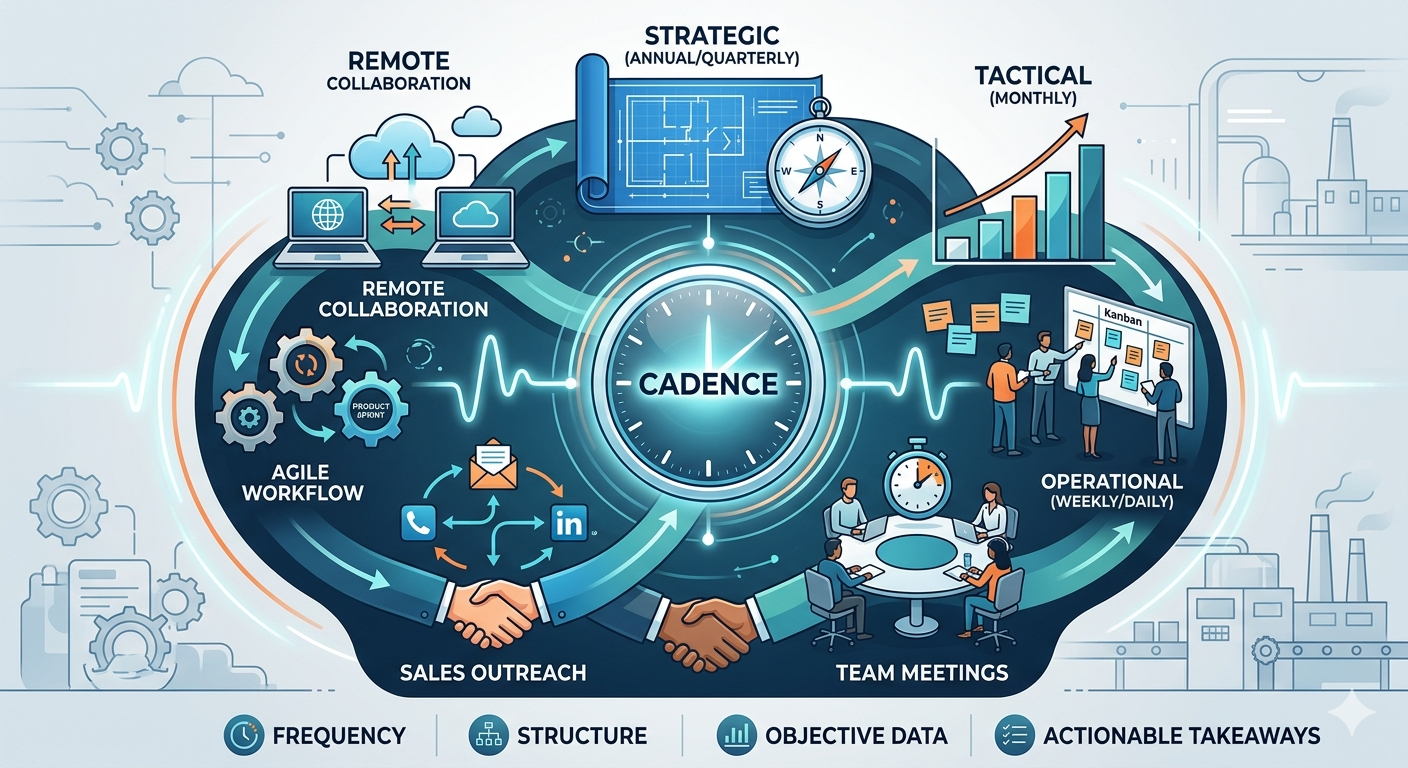
In today’s fast-paced corporate world, consistency is the ultimate growth hack. Teams that operate without a fixed rhythm often face miscommunication, missed deadlines, and chaotic workflows. This is where the concept of a business cadence becomes essential.
But what exactly does it mean, and how can you implement it to drive operational excellence? This comprehensive guide breaks down everything you need to know about building, maintaining, and optimizing a powerful cadence in your organization.
What is a Cadence? (Definition and Meaning)
In simple terms, a cadence refers to the rhythm, frequency, and pattern of a recurring event. In a business context, it represents the predictable schedule of communication, operational reviews, and strategic planning within a company.
Think of it as the heartbeat of your business. Just like a musical beat keeps an orchestra in sync, a structured business cadence ensures that everyone—from entry-level executives to the C-suite—moves in the same direction at the right speed.
Why is Establishing a Business Cadence Critical?
Without a structured routine, companies rely on “reactive communication”—only talking when a problem arises. Establishing a proactive routine offers several key benefits:
- Eliminates Meeting Fatigue: When team members know exactly when the next update is, they spend less time sending random Slack messages or hosting ad-hoc calls.
- Improves Accountability: Regular touchpoints ensure that projects stay on track and blockers are identified early.
- Strengthens Remote Collaboration: For distributed workforces, a reliable communication structure keeps remote employees engaged and aligned with company goals. If you manage a distributed setup, mastering a dedicated [leadership cadence for remote teams] is key to keeping cultural alignment strong.
Core Elements of an Effective Team Cadence
A successful workflow structure isn’t just about throwing random meetings onto a shared Google Calendar. It requires strategic design based on three foundational elements:
- Frequency: How often does the interaction happen? This can range from daily standups to annual board meetings.
- Format & Agenda: Every recurring session must have a strict template. Who speaks first? What metrics are reviewed? What is the goal?
- Actionable Takeaways: A cadence is useless if it doesn’t lead to concrete next steps. Every cycle must review the outcomes of the previous cycle.
To see exactly how these elements look in action, you can explore our curated list of team meeting cadence examples and templates to download operational frameworks that you can copy and paste directly into your workflow.
Types of Cadences in the Corporate World
Depending on your department, the structure and objective of your rhythm will vary drastically. Let’s look at how different industries utilize this strategy:
1. Project Management & Agile Frameworks
In modern software development and project management, teams use sprints to ship products faster. However, many professionals confuse how a continuous operational rhythm fits into a strict project timeline. Understanding the distinct roles of a [cadence vs sprint in agile] is critical for maintaining high output without burning out your development team.
2. Sales & Outbound Marketing
For sales teams, a cadence is a step-by-step sequence of outreach touchpoints designed to connect with a prospective client. A high-converting outbound strategy typically blends emails, phone calls, and LinkedIn messages over a fixed period. Building an effective [sales cadence outbound sequence] ensures that your sales pipeline remains full and consistent.
Furthermore, executing this at scale manually is impossible. To automate this rhythm seamlessly, most modern enterprises leverage specialized software. You can evaluate the top market solutions in our detailed review of the [best sales cadence software tools] to find the right platform for your tech stack.
How to Design Your First Team Cadence Workflow
If you are ready to implement a structured rhythm in your business or team, follow these four simple steps:
Step 1: Define the Ultimate Objective
Before booking a single event, ask yourself: What is the goal? Is it to unblock daily technical issues, review monthly financial metrics, or align quarterly company goals?
Step 2: Establish the Ideal Frequency
Match the frequency to the speed of the work. Daily frequencies work best for operational tasks (like customer support or development standups). Monthly or quarterly frequencies are better suited for broader strategic reviews.
Step 3: Document the Rules and Stick to Them
Consistency is the hardest part of this strategy. Ensure that your meetings start and end exactly on time, regardless of who is missing. Treat the schedule as unchangeable.
Summary & Next Steps
A well-oiled business cadence turns chaos into a predictable machine. It alignment, ensures continuous improvement, and helps your business scale smoothly.
Now that you understand the macro-level framework of operational rhythms, it’s time to dive into execution. Start by standardizing your internal communication or building your outreach sequences using the specialized sub-guides highlighted throughout this article.