

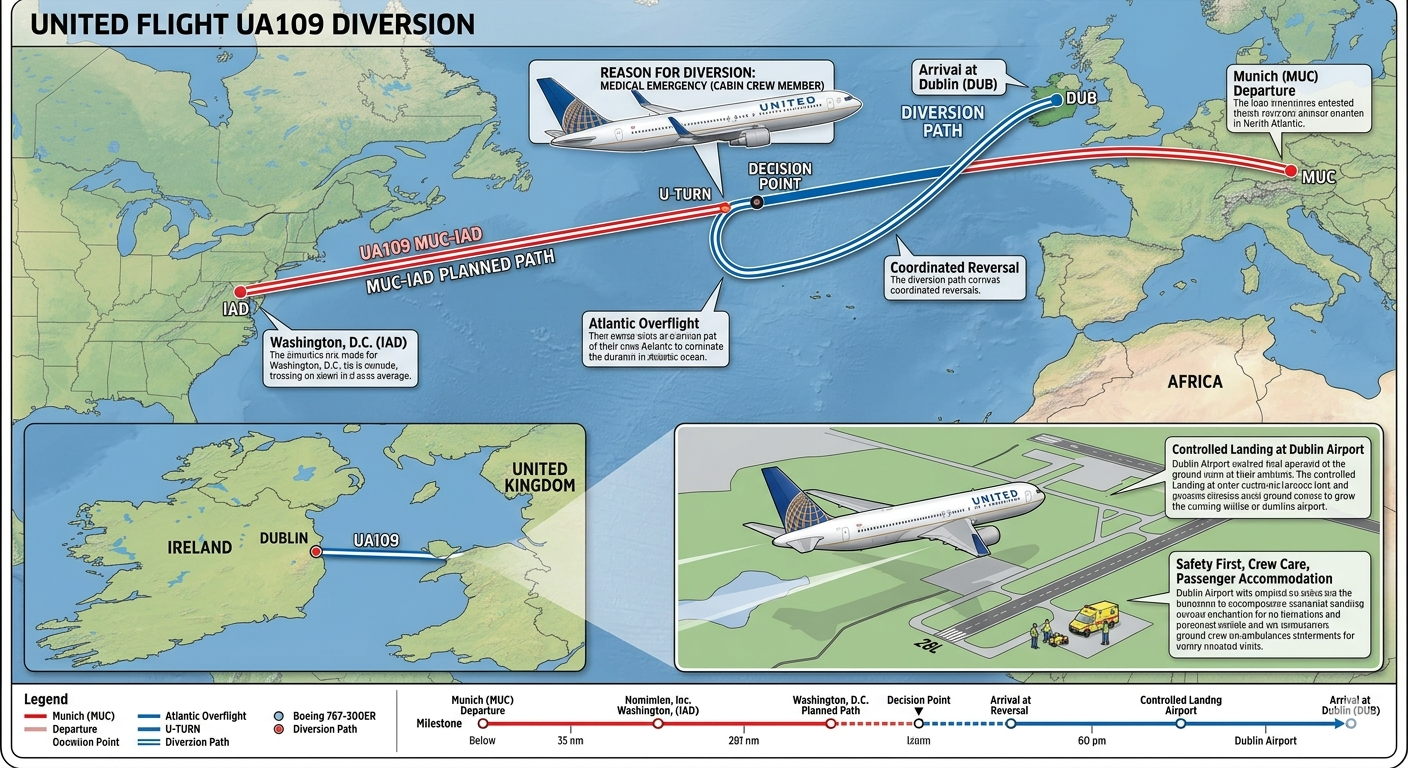
Air travel can be both exhilarating and unpredictable. Recently, the diversion of United Flight UA109 from Munich to Washington gained attention for its unexpected turn of events. Passengers aboard must have felt a mix of concern and curiosity as they navigated the situation. With medical emergencies, crew responses, and flight tracking at play, this incident raises important questions about airline operations in critical moments. Buckle up as we dive into the details behind the UA109 diversion—revealing what really happened on that fateful journey!
Inside the UA109 Diversion: Medical Emergencies, Crew Compliance, and Flight Tracking Details
The UA109 diversion sheds light on the complexities of handling medical emergencies mid-flight. When a passenger experiences health issues, every second counts. Crew members are trained to assess situations quickly and provide necessary aid, ensuring safety remains priority number one.
Flight tracking tools also play a vital role in these scenarios, allowing airlines to make informed decisions about diversions. Air traffic controllers and airline operations teams work seamlessly together to reroute flights efficiently while keeping everyone updated on their journey’s new path—an essential element during such critical incidents.
Introduction
On September 30, 2023, United Airlines Flight UA109 made headlines when it diverted unexpectedly during its route from Munich to Washington D.
C. This incident raised eyebrows among aviation enthusiasts and casual travelers alike. Medical emergencies on flights can escalate quickly, making the response of the crew critical.
Understanding what happened during this particular flight not only sheds light on emergency preparedness but also highlights the complexities of air travel logistics. As we delve into the details surrounding UA109’s diversion, we reveal insights that matter to both frequent flyers and those curious about airline operations.
Medical Emergencies on Flights
Medical emergencies during flights can be alarming for passengers and crew alike. In the confined space of an aircraft, even minor health issues can escalate quickly. Pilots and flight attendants are trained to handle these situations, often relying on onboard medical kits and their knowledge of emergency protocols.
When a passenger experiences a serious medical incident, immediate communication with ground-based medical teams becomes essential. They guide the crew in assessing the situation and determining whether to divert the flight or continue to its destination. These swift decisions can make all the difference in ensuring passenger safety during air travel.
Crew Compliance and Emergency Response
Crew compliance is vital during any flight, especially when emergencies arise. Each member of the cabin crew undergoes rigorous training to handle various situations. They are prepared to maintain safety protocol and ensure passengers remain calm.
In cases like the UA109 diversion, effective communication plays a critical role. The crew must assess the situation quickly and execute emergency procedures efficiently. Their responses can make all the difference in maintaining order and comfort for everyone onboard amid unexpected challenges.
Flight Tracking Details
Flight tracking has become an essential aspect of modern air travel. Passengers can monitor their flights in real-time, providing peace of mind and updates on arrival times. For UA109, flight tracking played a crucial role in keeping everyone informed about the diversion.
When the Munich to Washington route unexpectedly shifted towards Dublin, real-time data allowed passengers to understand the situation better. Airlines utilize advanced technology to relay information seamlessly, ensuring that even during emergencies like this one, communication remains clear and efficient for all onboard.
United Flight UA109 Diversion: Why the Munich to Washington Flight Landed in Dublin
United Flight UA109, en route from Munich to Washington D.
C., made an unexpected landing in Dublin. This diversion was prompted by a medical emergency aboard the flight, which required immediate attention.
The decision to land in Dublin allowed for swift access to medical professionals and facilities. The safety and well-being of passengers remained a priority, showcasing the airline’s commitment to handling emergencies effectively while maintaining compliance with aviation regulations.
Core Incident Identifiers
When analyzing the UA109 diversion, several core incident identifiers emerge. These include pilot communication, passenger health reports, and real-time data from flight systems. Each plays a critical role in understanding why the aircraft made an unscheduled landing.
Additionally, crew actions during emergencies are vital indicators of how effectively protocols were followed. Quick decision-making can significantly impact outcomes in medical situations aboard flights. Understanding these elements helps clarify the complexities surrounding such diversions and enhances safety measures for future journeys.
Diversion Reasons & Operational Details
Flight diversions can occur for several reasons, with medical emergencies being a primary factor. When a passenger experiences a severe health issue, the crew must act quickly to ensure their well-being. This often leads to an unscheduled landing at the nearest airport equipped to handle such situations.
Operational details play a critical role in these scenarios. The flight crew assesses real-time data and weather conditions while coordinating with air traffic control. Their experience ensures that every diversion decision prioritizes safety without compromising efficiency, allowing them to navigate complex logistics smoothly even amidst challenging circumstances.
Passenger & Logistics Information
Passengers aboard UA109 faced unexpected changes during the Dublin diversion. The flight crew kept everyone informed, ensuring that travelers understood their options upon landing. This communication helped ease anxiety in an already tense situation.
Logistically, United Airlines coordinated with local authorities to manage passenger needs effectively. Ground services were prepared with accommodations and transportation for those affected by the unplanned stop. Keeping passengers comfortable and safe was a top priority as they navigated this sudden shift in their journey from Munich to Washington.
What is the United 45 minute rule?
The United 45 minute rule is a guideline that outlines how long an aircraft can remain on the ground before takeoff. Specifically, if a flight hasn’t departed within 45 minutes of its scheduled time, it may face potential cancellations or diversions. This policy helps airlines manage schedules effectively and minimize delays for passengers.
By adhering to this rule, United Airlines strives to maintain operational efficiency while ensuring passenger safety and comfort. If circumstances arise that cause significant delays, crew members must evaluate options like returning to the gate or diverting where necessary.
Why is the flight being diverted?
The diversion of United Flight UA109 was primarily due to a medical emergency onboard. When a passenger experiences a critical health issue, the crew must make rapid decisions to ensure everyone’s safety. In this case, diverting to Dublin allowed for immediate access to medical facilities.
Additionally, the airline’s protocols dictate that when faced with such emergencies, the priority is always on passenger welfare. This commitment often necessitates altering flight paths for timely assistance and care. The decision reflects both regulatory requirements and compassionate action by the crew in high-pressure situations.
What was the cause of the crash of United Airlines Flight 232?
The crash of United Airlines Flight 232 on July 19, 1989, was primarily caused by a failure in the DC-10’s tail-mounted engine. A catastrophic mechanical failure led to the loss of all hydraulic controls, making it nearly impossible for the flight crew to steer or control the aircraft effectively.
Despite these harrowing circumstances, the flight crew managed an extraordinary emergency landing attempt at Sioux City Airport. Their efforts saved many lives and highlighted critical lessons about pilot training and emergency procedures in aviation safety protocols. The incident remains a key case study for airline operations worldwide.
Who is better, Delta or United
Choosing between Delta and United can be challenging for travelers. Each airline has its own strengths, making them appealing depending on your needs. Delta is often praised for its customer service and reliability, frequently earning high ratings in satisfaction surveys.
On the other hand, United offers a vast network of international routes and connections. Its MileagePlus loyalty program is another attractive feature for frequent flyers. The best choice may depend on destination preferences, flight availability, or personal experiences with each carrier’s service quality.
FAQs
Travelers often have many questions regarding the UA109 diversion. One common query is about how medical emergencies are handled on flights. Airlines prioritize passenger safety, with trained crew ready to respond swiftly and effectively.
Another frequent concern revolves around flight tracking. Many wonder how they can stay updated during such incidents. Various online platforms and mobile apps provide real-time information, allowing passengers and their families to follow the situation closely without missing a beat.
Conclusion
The story of the UA109 diversion sheds light on the complexities and challenges faced in aviation. Medical emergencies can strike at any time, prompting swift action from crew members trained to handle such situations. The importance of compliance with protocols ensures passenger safety during these unexpected events.
Flight tracking has become an essential tool for understanding diversions like that of UA109. It provides real-time information and transparency for passengers and their loved ones. With every diversion comes a series of operational decisions, driven by safety first principles.
As we reflect on this incident, it serves as a reminder of the unpredictability within air travel. Passengers are encouraged to stay informed about airline policies, including emergency response strategies and logistical considerations when flying.
The question remains: How prepared are airlines for unforeseen circumstances? As travelers navigate through various options like Delta or United, knowing what to expect could make all the difference during your journey.