

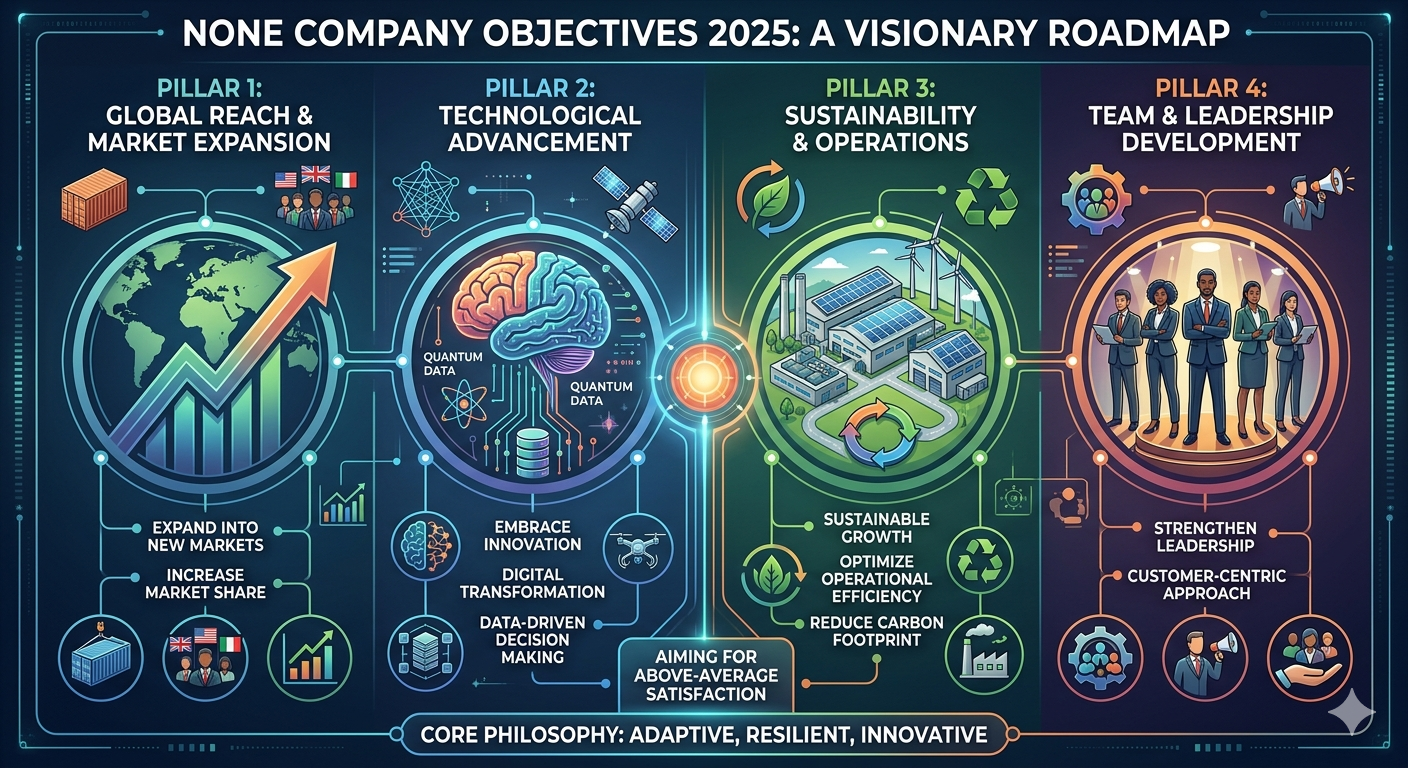
Introduction to None Company’s Vision and Objectives
As businesses evolve, their visions and objectives become pivotal to long-term success. None Company is no exception. With a firm commitment to shaping the future beyond mere profit, they have laid out a comprehensive plan for 2025. This ambitious roadmap not only aims at financial growth but also prioritizes sustainability and social responsibility. Let’s delve into what makes None Company’s vision so compelling and how it positions them in an ever-changing market landscape.
Analyzing None Company’s Vision Statement
None Company’s vision statement encapsulates its aspirations and long-term goals. It reflects a commitment to innovation, sustainability, and community engagement. This forward-thinking approach positions the company as a leader in its industry.
By prioritizing social responsibility alongside profitability, None Company aims to inspire trust among stakeholders. The clarity of their vision fosters alignment across teams, encouraging collaboration towards shared objectives for 2025.
None Company’s Objectives and Key Initiatives for 2025
None Company’s objectives for 2025 focus on innovation, sustainability, and community impact. They aim to enhance their product offerings while prioritizing environmental responsibility.
Key initiatives include investing in renewable energy sources and developing partnerships with local organizations. These efforts will drive growth while fostering a positive social footprint, positioning None Company as a leader in its industry.
IV. Comparing None Company’s Vision and Objectives with Competitors
None Company’s vision and objectives stand out in a competitive landscape. While many firms focus solely on profit, None Company emphasizes sustainability and community impact.
Competitors may offer similar products, but their mission often lacks depth. By prioritizing ethical practices alongside growth, None Company distinguishes itself as a leader committed to creating lasting positive change.
Strategies for None Company’s Future Growth and Sustainability
None Company aims to foster innovation by investing in cutting-edge technology and sustainable practices. By prioritizing eco-friendly solutions, they align their operations with global sustainability trends.
Additionally, None Company focuses on building strategic partnerships that enhance market reach. These collaborations will enable them to tap into new markets while maintaining a commitment to social responsibility and environmental stewardship.
Conclusion: The Implications of None Company’s Vision and Objectives
None Company’s vision and objectives for 2025 mark a significant shift toward sustainable growth. By prioritizing social impact alongside profit, they are redefining success in the corporate world.
These implications extend beyond their operations. Other companies may feel inspired to adopt similar strategies, fostering an industry-wide change that emphasizes responsibility and innovation. The ripple effects could reshape business norms considerably in the coming years.
Why None Company Objectives 2025 Matter
None company objectives 2025 are crucial as they provide a roadmap for the future. They guide decision-making and align resources towards common goals, ensuring that everyone is on the same page.
Additionally, these objectives reflect a commitment to sustainability and corporate responsibility. In a rapidly changing market, staying focused on clear targets helps organizations adapt while pursuing long-term success.
Core Pillars of None Company Objectives 2025
The core pillars of None Company Objectives 2025 revolve around innovation, sustainability, and community engagement. By prioritizing these areas, the company aims to drive growth while ensuring a positive impact on society.
Fostering partnerships and enhancing technology will also play crucial roles. These elements create a robust foundation for achieving ambitious targets in the coming years. Emphasizing collaboration further strengthens their mission.
Key Performance Indicators (KPIs) for 2025
Key Performance Indicators (KPIs) for 2025 are essential metrics that None Company will use to measure progress. These indicators should align with strategic objectives, focusing on growth, sustainability, and customer satisfaction.
Tracking KPIs like revenue growth, market share expansion, and employee engagement will provide valuable insights. Regular assessment of these metrics ensures None Company stays on course toward its ambitious goals for the future.
Implementation Strategy for None Company Objectives 2025
An effective implementation strategy for None Company objectives 2025 must begin with clear communication. Engaging all stakeholders ensures that everyone understands their role in achieving these goals.
Next, setting up a timeline with specific milestones will help track progress. Regular assessments can identify any need for adjustments, ensuring the company stays on course toward its ambitious aims while fostering accountability throughout the organization.
Challenges in Implementing none company objectives 2025
Implementing none company objectives 2025 presents several challenges. Resistance to change within the organization can stall progress, making it vital to address employee concerns early in the process.
Additionally, aligning resources with these ambitious goals may prove difficult. Limited budgets and shifting market dynamics require constant adaptation and strategic planning to ensure success while maintaining operational efficiency.
What are the None Company Objectives 2025?
None Company Objectives 2025 focus on innovation, sustainability, and community engagement. The aim is to create a positive impact while driving growth in an evolving market landscape.
These objectives emphasize collaboration, ensuring that all stakeholders are aligned with the company’s vision. By fostering partnerships and embracing new technologies, None Company aspires to redefine success beyond traditional profit metrics.
Why None Company Objectives 2025 Matter More Than Ever
As businesses navigate an evolving landscape, none company objectives 2025 serve as essential guiding stars. They align teams and resources towards a common purpose, ensuring everyone is on the same page.
Moreover, these objectives help organizations anticipate market changes and adapt swiftly. Adopting clear goals fosters innovation and resilience, crucial traits for sustaining growth in today’s competitive environment.
Vision and Mission — The Foundation of Strategic Planning
A clear vision and mission are crucial for guiding a company’s strategic planning. They define the organization’s purpose and aspirations, serving as a roadmap for decision-making.
When employees align with these core principles, it fosters unity and direction. This alignment empowers teams to pursue objectives cohesively while adapting to challenges that arise in achieving none company objectives 2025.
FAQ 1: What are none company objectives 2025?
None company objectives 2025 refer to the strategic goals set by organizations that prioritize values beyond profit. These objectives focus on sustainability, community engagement, and social responsibility.
By 2025, many companies aim for measurable impacts that align with ethical practices. Emphasizing innovation and collaboration, these objectives help shape a better future while enhancing brand reputation and customer loyalty.
FAQ 2: Are none company objectives 2025 tied to a specific company?
None company objectives 2025 are intentionally broad and not linked to a specific organization. This approach encourages various businesses to adopt similar goals that align with their values and missions.
These objectives serve as a framework for companies across different industries. They aim to inspire innovation, sustainability, and community engagement while fostering collaboration among diverse enterprises striving for growth in 2025.
FAQ 3: Why are corporate objectives important in 2025?
Corporate objectives in 2025 are crucial for guiding organizations through rapidly changing markets. They provide a clear direction, enabling teams to focus their efforts on shared goals.
Additionally, well-defined objectives foster accountability and measurement. Companies can evaluate performance against these targets, ensuring strategic alignment and resource allocation that drive sustainable growth and innovation in an increasingly competitive landscape.
FAQ 4: How do companies set strategic objectives?
Companies set strategic objectives by first analyzing their mission, vision, and values. This ensures alignment with long-term goals.
Next, they conduct market research to identify trends and opportunities. Stakeholder input is crucial in refining these objectives, ensuring they are realistic yet challenging enough to drive growth. Regular reviews help adjust strategies based on performance and external changes.
FAQ 5: What are examples of business objectives for 2025?
Examples of business objectives for 2025 can vary widely based on industry and company goals. Common objectives include increasing market share by a specific percentage, enhancing customer satisfaction ratings, or launching innovative products.
Other examples could involve reducing operational costs through efficiency improvements, achieving sustainability targets, or expanding into new geographic markets. Each objective should align with the company’s vision and strategic plan.
FAQ 6: How can companies avoid having none company objectives 2025?
To avoid having vague or irrelevant objectives, companies should engage in thorough market research. Understanding industry trends and consumer needs is crucial for setting meaningful goals.
Regularly review and adjust objectives based on performance data. This ensures that the company remains aligned with its mission and can adapt to changing circumstances effectively. Clear communication within teams also fosters a focused approach toward achieving specific targets.
FAQ 7: How do organizations measure success against their objectives?
Organizations measure success against their objectives through key performance indicators (KPIs). These metrics provide quantifiable data that shows progress toward goals.
Regular assessments, feedback loops, and performance reviews also play a crucial role. By analyzing results and adjusting strategies accordingly, companies can ensure they stay on track to meet their defined objectives effectively.
FAQ 8: What are the main benefits of adopting none company objectives 2025?
Adopting none company objectives 2025 offers clear direction. Companies gain a roadmap for growth and innovation, aligning efforts across teams. This focus fosters collaboration and unity.
Additionally, it enhances accountability as employees understand their roles in achieving these goals. Embracing such objectives can also improve stakeholder confidence, attracting potential investors who value commitment to long-term vision.
FAQs
Frequently asked questions help clarify the objectives and vision of None Company for 2025. They provide insights into how these goals impact strategy and operations.
Understanding these FAQs is essential for stakeholders. It fosters transparency and encourages engagement with None Company’s mission, ensuring everyone is aligned as they work towards achieving their ambitious objectives.
Conclusion
The vision and objectives of None Company for 2025 represent a pivotal moment in its journey. By emphasizing sustainability, innovation, and community engagement, the company is preparing not just to meet future challenges but to thrive amidst them. Understanding these objectives offers insight into the organization’s long-term strategy and commitment to positive change. As we move closer to 2025, watching how None Company implements these goals will be crucial for stakeholders and competitors alike. The road ahead promises growth, transformation, and a renewed focus on purpose beyond profit.